$100 in. $500 out.


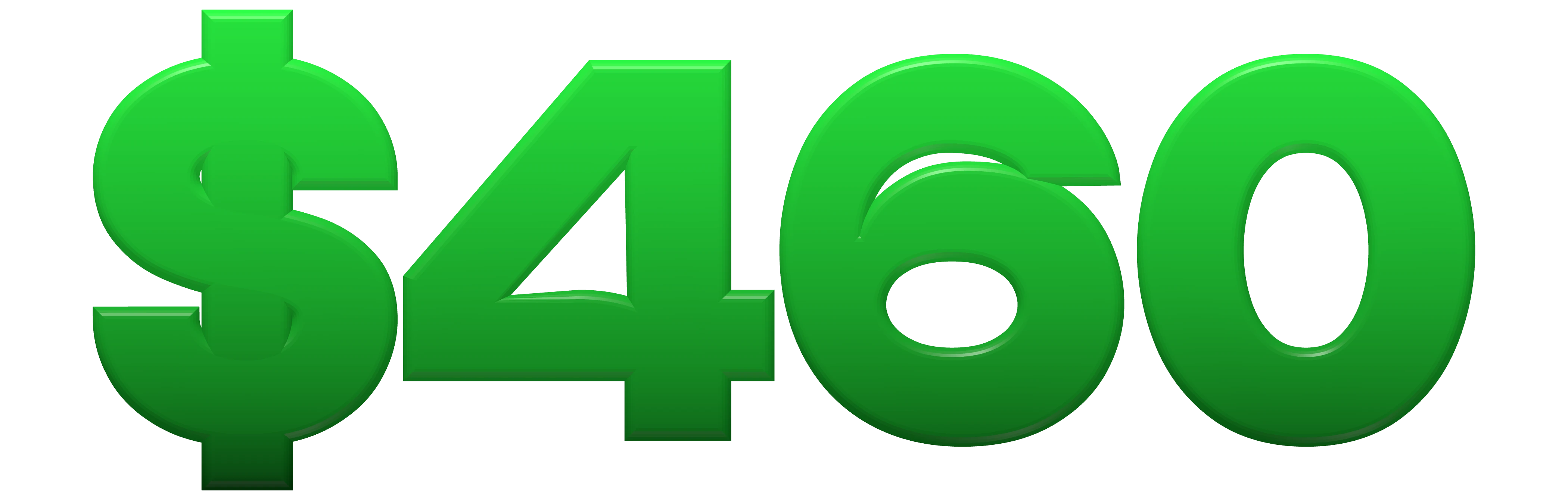
to you.
The tip comes out of your win.
Never out of your loss.



A launchpad and a trading app · Robinhood Chain
Coins are born in the Kitchen. Three rules, and only one costs you anything: a win tip of 10% of the profit, not of the trade.
Pre-launch. Nothing is deployed yet.
Three rules

One trade, start to finish
How it works
That is how the tip tells a win from a loss.
A creator launches it in one transaction. Fixed supply of 1,000,000,000. The launch liquidity is locked forever.
No LP fee. No protocol fee. The pool's fee is set to zero.
The coin stores it for each wallet. Buy more at another price and it averages out.
Sell above what you paid: 10% of the profit. Sell at or below it: nothing. Sell part of your bag and only that part is tipped.
Holds 1,000 coins, paid $0.10 each.
Basis: $100The cost travelled with the coins.
B's basis: $50Profit $200. Tip $20.
B keeps $230The tip is charged inside the swap. It never makes a normal trade fail.
Where the money goes
The splits are constants in the fee router. No one can change them, including us.
For creators
Name, ticker, image, one line. One transaction puts your coin on the stove.
For creators
Name, ticker, image, one line. One transaction puts your coin on the stove.
For creators
1,000,000,000 coins. Add an optional first buy of up to 5% of the supply in the same transaction, at the price you pay.
Your coin's winners tip 10% of their profit. A quarter of that is yours. Claim any time.
The full supply goes into the Kitchen pool. The locker that holds it has no withdraw function. Not even you can pull it.
Buys are 0%, so there is no snipe tax. Instead, for the first 5 minutes each wallet can buy at most 1% of the supply in total. Selling is never limited.
Every launch gets the win tip and the ingredients automatically.
Launch fee: 0.002 ETH for a coin paired with $HOOKING, 0.01 ETH for a coin paired with ETH, 100% to $HOOKING buyback and burn. Default pair: $HOOKING. Every coin opens at a 4 ETH fully diluted valuation (for $HOOKING pairs, converted at $HOOKING's 30-minute average price), with its whole supply in one position from the opening price up, locked forever.
Where the money goes
Every burn is public. Each one is recorded on chain and adds to a public burn counter in the app.
Tips arrive in the pool's quote currency. The $HOOKING share is burned directly when it already is $HOOKING, otherwise swapped, then burned. Flambé's vault depositors share its profit; the vault can also lose money. Another 0.25% of each Parachute sale pays whoever sells it.
The menu
Flambé · Phase 1. Double or nothing on a buy.
Parachute · Phase 1. An automatic exit on a buy.
Heat · Phase 1. Leverage on a young coin.
Slow cook · Phase 1. A big buy, spread over hours.

Ingredients are optional. You pick them per trade in the Hooking app. They run beside the pool, never inside it.
Every finished trade prints a share card, what you cooked and what you won, ready to post on X.
Save a combo of ingredients, give it a name, share it. Others can copy it.
Outside developers publish new ingredients and earn 50% of their ingredient's fees.
Ingredients come with trades in the Hooking app. Trades through an aggregator pay the same win tip but carry no ingredients.
$HOOKING
$HOOKING is planned to launch through the Kitchen itself, paired with ETH, opening at 10 ETH fully diluted, under the same three rules as every other coin.
If revenue were about 60% tips, 30% Flambé, 5% Parachute and 5% launches, about 58% of all revenue would become market buys of $HOOKING (burns plus creator payouts).
58%Illustrative, not a projection.
0.60 x 60% + 0.30 x 40% + 0.05 x 100% + 0.05 x 100% = 58%
On memecoins, a few big winners carry the volume. A flat 1% fee on a $500 sell is $5. A 10% tip on that $400 profit is $40. The tip earns more, and charges nobody who did not win.
$HOOKING does not exist yet. Nothing is set aside for a sale. Any $HOOKING offered to you today is not ours.
Security
The parts that hold the pool cannot be changed. The parts that can change never hold pool liquidity.
Flambé starts with caps on each stake and on what a coin, and the vault as a whole, can take in an hour, raised only after clean weeks.
Hooks have been exploited before. The code gets an internal review, a fuzzing campaign and a freeze, then an outside audit.
A multisig adds new ingredients behind a 72-hour timelock. Any ingredient can be paused at once. A pause stops new activity and can never move funds.
They never take custody of pool liquidity. Flambé holds only its own vault; Parachute holds nothing between trades. The design assumes one will be buggy someday.
The coin, the hook, the factory, the locker and the fee router have no owner and no setters. No admin can change fees, splits or anyone's basis.
The week-1 spike passed on a Robinhood Chain mainnet fork, through both official Uniswap Universal Routers. Buys paid 0%. Winning sells paid exactly 10% of the profit. Losing sells paid exactly 0.
Since then, the launch contracts (the coin, the hook, the factory, the liquidity locker and the fee router), Flambé with its vault, router and registry, Parachute, the automatic exit, Slow cook and Heat are written. 532 tests, fuzzed invariants and runs on a mainnet fork included.
The whole Kitchen runs end to end on a local fork: launches, trades, flips, parachutes and fee splits through the app, with the keeper and the Flambé house. The indexer is built, a demo runs on play money, and a private test chain runs a scripted check of every feature.
Nothing is deployed. Nothing is audited yet.
Roadmap
Milestones in order. Dates come when they are real.
Coin basis and win tip on a Robinhood Chain fork, router compatibility
Factory, liquidity locker, launch curve, anti-snipe, fee router and burns
Kitchen router, Flambé and its vault, commit-reveal randomness
Parachute, the automatic exit, and the hook's price oracle, with manipulation tests
Indexer, app screens, Slow cook and Heat, the private test chain and the demo
Internal review, fuzzing, gas pass, code freeze
External audit and fixes
$HOOKING first, then open launches, caps on
Later: phase 3, the open kitchen (Chefs' ingredients, Recipes and Plates as the social layer).
FAQ
A launchpad and a trading app in one, built on a Uniswap v4 hook on Robinhood Chain. Coins born in the Kitchen cost 0% to buy, 0% to sell at a loss, and 10% of the profit to sell at a win. Hooking is pre-launch: nothing is deployed yet.
You pay nothing. A sell at or below what you paid has no fee and no tip.
Sell price minus what you paid, per coin, times the coins you sell. Buy more at another price and your basis becomes the average. Sell part of your bag and only that part is tipped. Profit is measured in the pool's quote currency, $HOOKING by default, so a rise in $HOOKING's own price while you hold is not tipped.
Their cost goes with them, up to what the coins are worth at the pool's 30-minute average price. Send half your bag and half your cost moves too, so a fresh wallet resets nothing. Coins that come from a zero-cost source carry a zero basis: sold at a profit, they tip 10% of the proceeds.
Not by switching wallets. Selling on another venue, such as another DEX pool or OTC, skips the tip. The Kitchen pool holds the launch liquidity, locked forever, so it stays the deepest place to sell. A loss cannot be passed along to lower someone else's tip: the cost that moves with the coins is capped at their market value.
Yes. A buy through an aggregator pays 0%, and a winning sell pays the same tip, worked out from the basis that travelled with the coins. The spike tested the aggregator pattern on a mainnet fork. Aggregator trades carry no ingredients; those come with trades in the Hooking app. Rare paths the hook cannot match pay the full 10% of proceeds.
Standard quoters simulate a sell without finishing it, so they show the most the tip could be: 10% of the proceeds. When the sell goes through, the real tip is worked out from what you paid, and anything held above it comes back to you in the same transaction. Hooking will ship a quote contract that knows the seller. Buy quotes are exact.
No verifiable randomness service runs on Robinhood Chain today (checked October 2026). So Flambé uses commit-reveal. The house publishes a hash of its seed in advance. The result mixes that seed with your own seed and the flip's number. The house reveals it within 10 minutes. If it does not, you can take your stake back, and a win is still paid when the seed comes out. Anyone can verify every flip. The win chance is about 48.5%, a house edge of about 3%.
No. Parachute is an automatic exit, a stop that anyone can execute. You set a line and a floor below the price you paid. Once the coin's 5-minute average price and its current price are both at or below the line, anyone can sell your coins for you through the Kitchen router, never below the floor, and you get the ETH. It pays nothing back: in a rug the average lags and the sale lands near the bottom, and a price that falls through the floor in one move is not sold. A legal read on Flambé and Parachute comes before launch.
Not yet. The contracts are written and tested on a fork of Robinhood Chain, 532 tests so far. An external audit comes before mainnet, and the first weeks run with caps.
No date yet. The order is: build, internal review, external audit, then a guarded mainnet with $HOOKING first and open launches after.
$HOOKING does not exist yet. It launches through the Kitchen as coin #1, paired with ETH, under the same three rules as every coin. 90% of the supply goes into its pool, locked forever, and 10% to the team, vested over 15 months with a 3-month cliff. Nothing is set aside for a sale. Any $HOOKING offered to you today is not ours.

Hooking is pre-launch. Leave your email and hear when the Kitchen opens.
Launch news only. Unsubscribe any time.


